
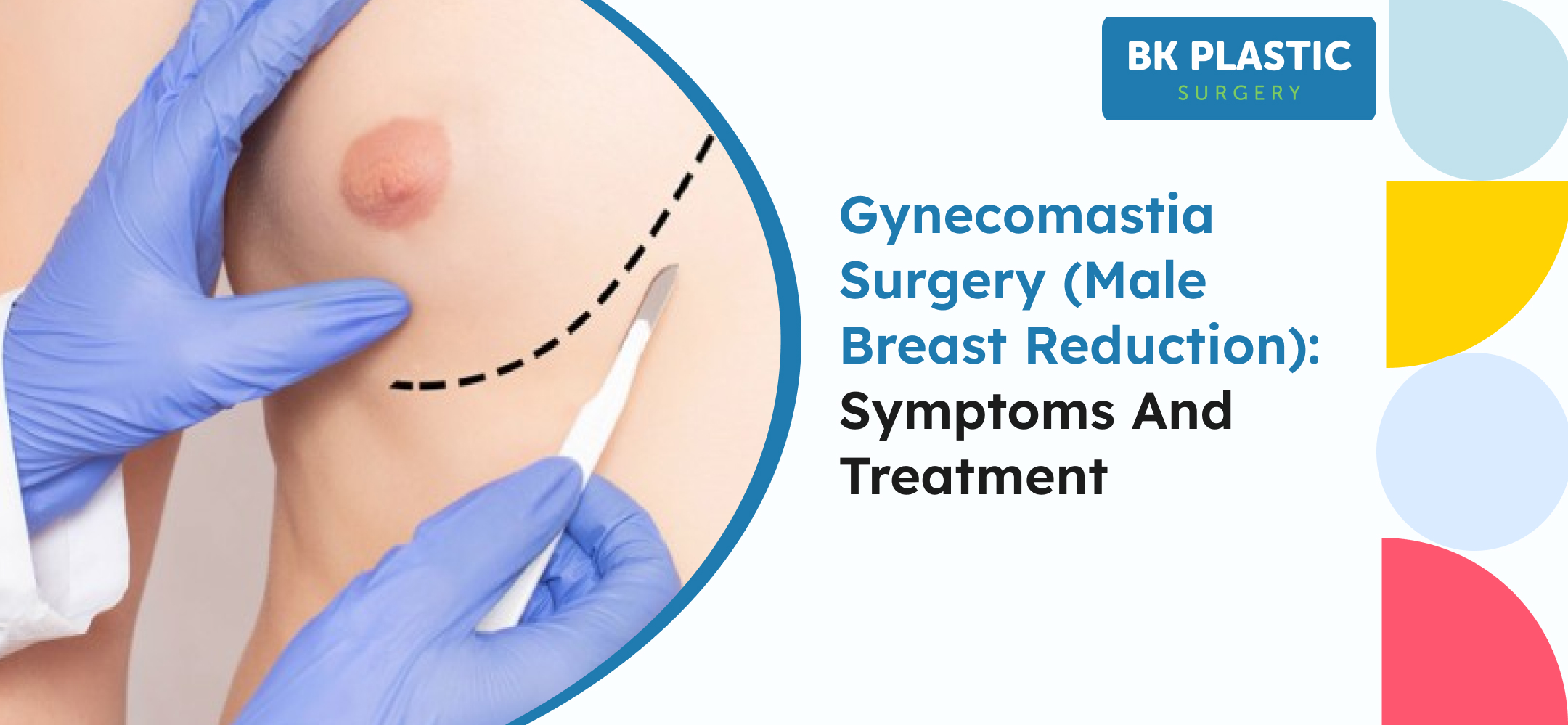
If you are someone who has avoided fitted shirts, skipped swimming, or felt self-conscious at the gym because of chest fullness, you’re not alone. Gynecomastia, or male breast enlargement, affects men of all ages, even if they follow regular exercise and a healthy lifestyle. Many men don’t realise that this condition isn’t just stubborn fat, and exercise won’t fix this issue. That’s where gynecomastia surgery comes into the picture – It is a proven solution that helps men regain their original appearance of a flat, masculine chest, as well as their self-esteem.
This blog explains the male breast reduction symptoms and treatment in practical terms – what the treatment involves, how much it costs, the benefits, and what recovery looks like – so you can make an informed decision.
What is Gynecomastia?
Gynecomastia (breast enlargement for men)is not a mere accumulation of unwanted fat or body weight. It refers specifically to the abnormal development of male breast tissue due to numerous reasons: hormones, genetics, medication, and medical conditions.
There are two main components that create gynecomastia:
1. Enlargement of true glandular tissue ( true gynecomastia)
2. Fat accumulation around the chest area (which is most often confused for true gynecomastia)
A significant number of men will experience both components. For this reason, many men will not achieve success through dieting and exercising their chest to resolve the gynecomastia issue. Even those men who appear to be in excellent shape can still develop enlarged breasts because of these various causes.
What are the symptoms of Gynecomastia ?
Symptoms of gynecomastia can differ in intensity from minor changes in the chest to significant male breast enlargement.
There are many different possible signs of gynecomastia in men. The following are some of the most well-known.
- Growth of male breasts – rounded (feminine shape) breast shape
- Rubbery or firm tissue beneath the nipple (an important indicator of glandular type gynecomastia)
- Puffy (swollen) nipples – especially when wearing tight-fitting clothes
- Asymmetrical chest (one breast larger than the other)
- Tender breast, pain, or tenderness in the area around the breast
- Increased sensitivity of the nipple, especially when exercising.
- Sagging skin in the chest occurs in the case of moderate to severe gynecomastia.
- Psychological disturbance of embarrassment, low confidence, anxiousness, etc, happens due to gynecomastia.
When is Gynecomastia surgery recommended?
Surgery for men’s chest reduction may be suggested when:
- The condition has been present for more than a year.
- It has not improved with either exercise or weight loss.
- There is noticeable chest bulging or sagging.
- The condition is causing physical pain or emotional distress.
From a practical perspective, the best time for male breast reduction surgery is after a physician has ruled out any hormonal cause and the patient is at a reasonable body weight.
Who is an Ideal Candidate?
A potential good candidate for treatment may be as follows:
1) Physically healthy individuals
2) Realistic expectations on outcome
3) Stable gynecomastia condition
4) Not on any significant weight loss or gain plan
There are no strict age barriers; teenage boys, adults and older men can all successfully achieve treatment for male gynecomastia if they are evaluated appropriately.
Gynecomastia Treatment:
A gynecomastia operation is performed based on the type and extent of tissue present and severity. A thorough examination will determine the right approach.
1. Liposuction of excess fat in the chest (Pseudo-Gynecomastia)
- It is a good option if the main concern is extra fat in the chest area.
- A small incision is made to remove fat with minimal scarring.
- Typically heals quickly after surgery.
- This technique is ideal for men with pseudo-gynecomastia or mild cases of gynecomastia.
2. Gland excision (actual gynecomastia)
- If there is a firm, glandular tissue, then a gland excision is necessary.
- Tissue is removed through a discreet incision.
- Men with true male gynecomastia must have gland excisions to prevent recurrence of fibrous gland tissue.
3. Combination technique
Patients will see the best results by having both liposuction and gland excision to achieve a satisfactory flat chest shape. Combination techniques provide a much more predictable and longer-lasting result.
Reference:
American Society of Plastic Surgeons (ASPS). Gynecomastia Surgery Procedure.https://www.plasticsurgery.org/cosmetic-procedures/gynecomastia-surgery/procedure
Gynecomastia Cost: What influences the price?
There are many factors that determine the gynecomastia treatment cost:
1. The male breast’s size
2. The type of surgery used to remove the breast
3. A surgeon’s level of expertise
4. Fees charged by hospitals and/or surgical centers
5. Anesthesia costs
6. The amount of compression garments and post-care
The cost of gynecomastia surgery in India is generally from Rs. 60,000 to Rs. 150,000, depending on complexity. Mild cases of chest fat removal can be treated for less than severe cases of gynecomastia.
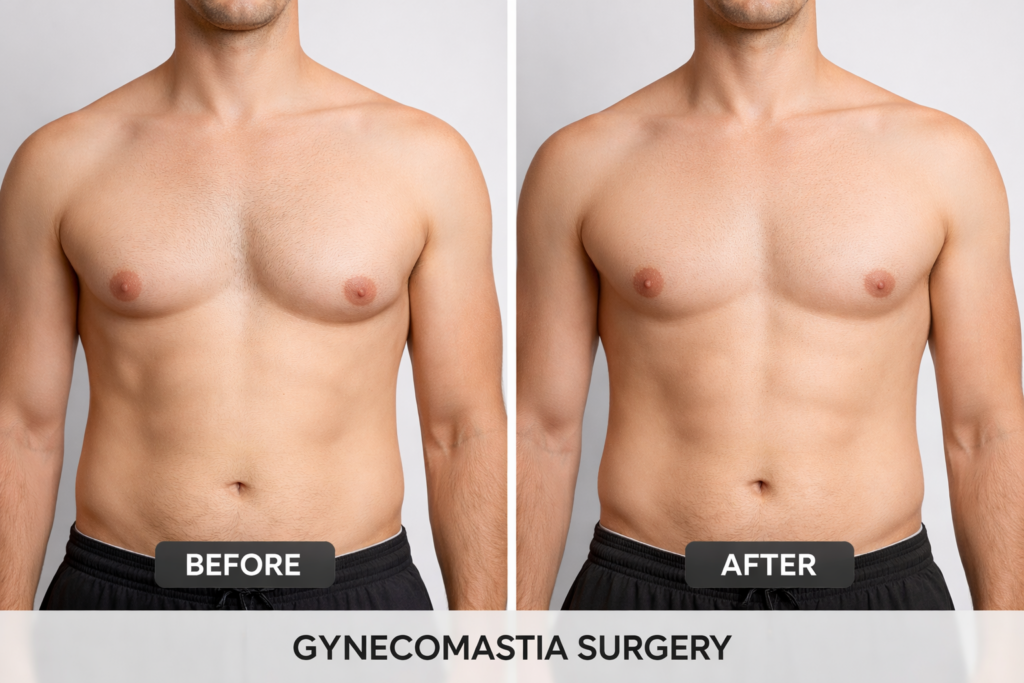
Benefits of Male Breast Reduction Surgery
From patient feedback and ongoing follow-ups, the advantages of this type of procedure extend far beyond mere aesthetics.
Physical Benefits
- A flat, firm chest
- Better overall posture
- Easier to do physical activities (exercise, sports, etc.)
- No discomfort or soreness in your chest area
Psychological Benefits
- Increased self-confidence
- Able to wear more fitted clothes
- Freedom to participate in activities at the gym or beach
- Less anxiety and self-doubt
For many men, this gynecomastia removal procedure is an emotionally fulfilling experience.
Recovery after Gynecomastia Surgery:
Recoveries go well when you follow directions.
The first week
- Mild pain, tightness, and swelling to go down.
- You’ll wear a compression garment all the time.
- After 3–5 days, desk work is possible.
Weeks 2–4
- You’ll see a gradual decrease in swelling,
- Can resume light activities
- Compression garments will be worn for part of the day.
Weeks 4–6
- You can return to the gym and chest workouts,
- The scars will fade, and your chest will begin to take shape.
- Most men return to their everyday lives very quickly.
Risks and Limitations of Male Breast Reduction:
Gynecomastia surgery, like any surgical procedure, has its own potential risks:
- Temporary bruising/swelling,
- Mild asymmetry as the tissues heal,
- Rarer risks of infection or bleeding,
- Scar visibility may be seen more clearly in certain skin types.
However, choosing an experienced and qualified surgeon, along with proper follow-up care guidelines, will also help reduce these risk factors.
Final Thoughts: Is Getting a Male Breast Reduction Worth It?
In short, gynecomastia surgery does not focus on aesthetic appeal, but rather provides men with comfort, confidence, and an improved quality of life. Male breast reduction produces long-term, positive changes when surgically treated using accurate methods.
Also, if you’ve been struggling with excessive breast tissue even after trying every diet and exercise possible, then male breast reduction surgery would produce results quicker than anything else.
Schedule a thorough consultation with an expert in male breast reduction surgery to help you understand all aspects of gynecomastia treatment to regain your lost confidence!
Author Bio
Dr. Barath Kumar Singh P is a certified Plastic, Reconstructive, and Aesthetic Surgeon at BK Plastic Surgery, Tiruvannamalai, with proven clinical experience in gynecomastia (male breast reduction) surgery. He follows evidence-based surgical practices to deliver safe, effective, and natural chest contouring results.
Medical Disclaimer
This content is meant for informational and educational purposes only. Diagnosis and treatment for gynecomastia can vary for individuals based on health conditions. Readers are advised to seek professional medical consultation before considering male breast reduction surgery.