

Key Facts
- Gynecomastia surgery removes excess male breast tissue to create a flatter chest.
- Common side effects include swelling, bruising, mild pain, and temporary numbness.
- Some may experience fluid buildup, minor asymmetry, or small scars that fade over time.
- Rare complications include infection, hematoma, or long-term sensation changes.
- Most side effects are temporary and part of normal healing.
- Proper aftercare and following medical advice ensure smooth recovery and better results.
Gynecomastia surgery, also known as male breast reduction surgery, is a common procedure used to reduce enlarged male breast tissue and restore a flatter, more masculine chest contour. For many men, the procedure can significantly improve comfort, body image, and confidence.
But before deciding on the procedure, one question naturally comes to mind: what are the possible gynecomastia surgery side effects?
In this blog, Dr. Barath kumar Singh P explains the most common gynecomastia surgery side effects, what is considered a normal part of healing, and when patients should seek medical advice.
Why Side Effects Occur After Gynecomastia Surgery
Gynecomastia surgery typically involves removing excess glandular tissue, fat, or sometimes skin through liposuction, excision, or a combination of both techniques. Because the procedure reshapes the chest and involves surgical manipulation of tissue, the body naturally reacts during the healing phase.
In my experience working with patients recovering from this procedure, the majority of concerns people notice in the first few weeks are simply part of normal recovery rather than complications.
Understanding which effects are temporary and which require medical attention can make the recovery process much less stressful.
Common and Temporary Side effects of gynecomastia surgery
Most men experience a few mild side effects during the initial recovery period. These usually resolve within a few weeks as the body heals.
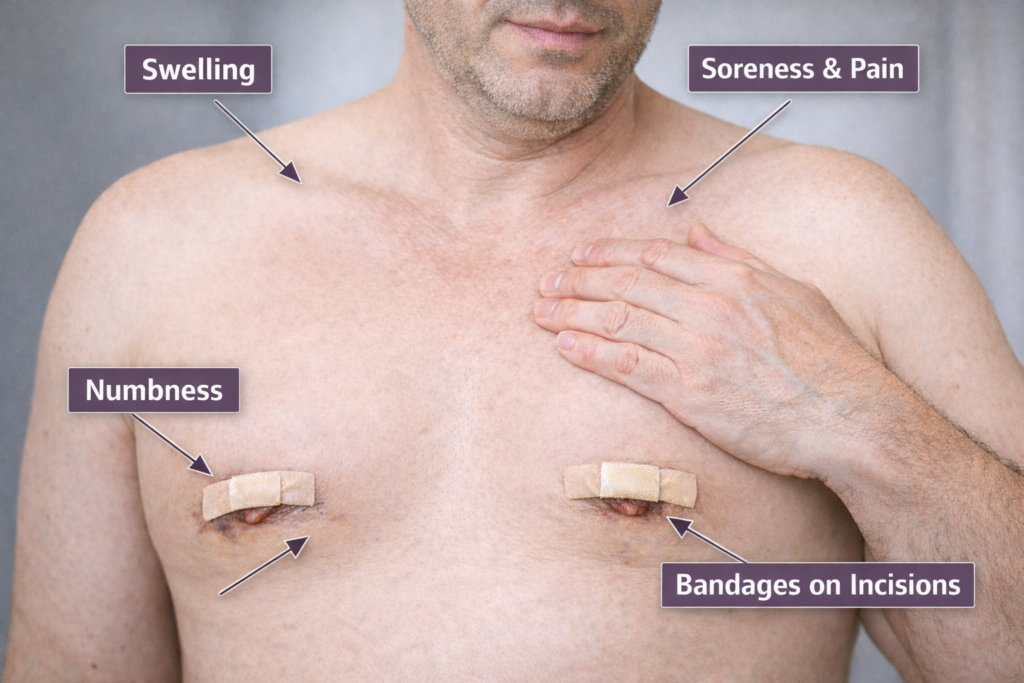
Swelling
- Swelling is the most common side effect after gynecomastia surgery.
- The chest may appear slightly puffy or uneven in the first few weeks.
- This happens because the body sends fluids and healing cells to the surgical area.
- Swelling typically improves significantly within 3- 4 weeks, although minor swelling can persist for a few months.
Bruising
- Bruising around the chest area is also normal.
- It occurs when small blood vessels are disrupted during surgery.
- Most bruising fades within 1- 2 weeks, and its severity varies from person to person depending on skin sensitivity and surgical technique.
Mild Pain or Discomfort
- Some soreness or tightness in the chest is expected after the procedure.
- Patients often describe the sensation as similar to muscle soreness after a workout.
- Pain is usually manageable with prescribed medication and gradually improves over several days.
Temporary Numbness or Reduced Sensation
- Another common gynecomastia surgery side effect is temporary numbness in the chest or around the nipples.
- This occurs because tiny sensory nerves are affected during tissue removal.
- Sensation typically returns over several weeks or months as the nerves heal.
Less Common Side Effects of gynecomastia surgery
There are other side effects of gynecomastia that take a little longer to heal.
Fluid Accumulation (Seroma)
- Sometimes fluid can collect under the skin after surgery. This is called a seroma.
- Surgeons often place small drains or use compression garments to reduce this risk.
- If fluid accumulates, it can usually be removed easily during a follow-up visit.
Minor Asymmetry
- During early healing, the chest may appear slightly uneven.
- This is usually due to swelling rather than permanent asymmetry.
- In most cases, the chest gradually becomes more symmetrical as the tissues settle and swelling resolves.
Scar Formation
- Small scars are inevitable after surgical procedures, especially if glandular tissue removal is required.
- However, experienced surgeons place incisions carefully around the areola or in natural skin folds to make scars less noticeable.
- Over time, scars usually fade and become much less visible.
Rare Complications of gynecomastia
Serious complications are uncommon, particularly when the procedure is carried out by a skilled plastic surgeon. However, as with any surgery, there is still a small possibility that they may occur.
Infection
- Infections are uncommon but possible after surgery.
- Symptoms may include redness, increasing pain, warmth, or unusual discharge from the incision.
- Following post-operative care instructions and keeping the surgical area clean greatly reduces this risk.
Hematoma (Blood Collection)
- A hematoma occurs when blood collects under the skin shortly after surgery.
- This may cause sudden swelling or firmness in the chest.
- Although rare, it may require medical attention to drain the collected blood.
Changes in Nipple Sensation
- While most sensation changes are temporary, in rare cases patients may experience long-term sensitivity changes in the nipple area.
- Permanent nerve damage is uncommon when the procedure is performed carefully.
Recovery Tips to Reduce Side Effects
Based on recovery patterns seen in clinical practice, patients who follow post-operative instructions closely after male breast reduction surgery tend to heal faster and experience fewer complications.
Common recovery steps are also explained in our complete blog on gynecomastia surgery.
Here are some practical steps that help support recovery:
Wear the compression garment
This reduces swelling and helps the chest adapt to its new shape.
Avoid strenuous exercise initially
Heavy lifting or chest workouts should usually be avoided for several weeks.
Attend follow-up appointments
These visits allow the surgeon to monitor healing and address concerns early.
Maintain realistic expectations
Final results often take 3-6 months to fully appear as swelling subsides and tissues settle.
When to Contact Your Surgeon
While most gynecomastia surgery side effects are mild and temporary, certain symptoms should be evaluated promptly.
Contact your surgeon if you notice:
- Rapid or severe swelling
- Persistent high fever
- Increasing pain rather than gradual improvement
- Excessive bleeding or fluid leakage
- Signs of infection
Early evaluation helps prevent minor issues from becoming more serious.
Why Choose BK Plastic Surgery for Gynecomastia Surgery?
Choosing the right surgeon plays a major role in achieving safe and satisfying results from gynecomastia surgery. At BK Plastic Surgery, the focus is on careful evaluation, personalized treatment planning, and patient safety.
Every patient’s condition is different. An experienced plastic surgeon assesses the type of tissue involved and recommends the most suitable surgical approach for natural-looking results.
Patients also receive clear guidance before and after the procedure, ensuring proper preparation and a smooth recovery journey.
Learn more about our Gynecomastia surgery treatment.
Conclusion
Understanding gynecomastia surgery side effects helps patients make informed decisions and prepare for a smooth recovery. Most side effects such as swelling, bruising, and temporary numbness are normal and resolve naturally as the body heals.
Serious complications are rare, particularly when the procedure is performed by a skilled surgeon and proper aftercare is followed.
If you are considering gynecomastia surgery, having an open discussion with a qualified specialist about risks, recovery, and expected outcomes is the best way to approach the treatment with confidence and clarity.