
Key Facts
- PRP (Platelet-Rich Plasma) hair treatment is a non-surgical procedure that uses your own blood to stimulate natural hair growth and improve follicle health.
- The treatment works by injecting concentrated platelets into the scalp to enhance blood flow, activate dormant follicles, and prolong the hair growth phase.
- It is most effective for individuals with early to moderate hair thinning, especially those with androgenetic alopecia (pattern hair loss).
- Most patients require 3 – 4 sessions spaced 4 – 6 weeks apart, with visible improvements typically seen within 2 – 3 months.
- PRP helps reduce hair fall, increase hair thickness and density, and improve overall scalp health with minimal downtime.
- The procedure is generally safe with mild temporary side effects like redness or swelling, and the cost depends on the clinic, expertise, and number of sessions.
The issues of hair thinning and hair loss can be quite challenging and emotional for many people. If you are among those who have been looking for an alternative to surgical options, one of the most common methods of treating thinning hair is to use Platelet Rich Plasma (PRP). If you are curious about what PRP is, how it works, its cost, and if it will help you, this blog will provide you with a complete overview of all these topics in an easy-to-understand format.
What is PRP Hair Treatment?
- PRP hair treatment is a non-surgical procedure that uses your own blood to stimulate hair growth.
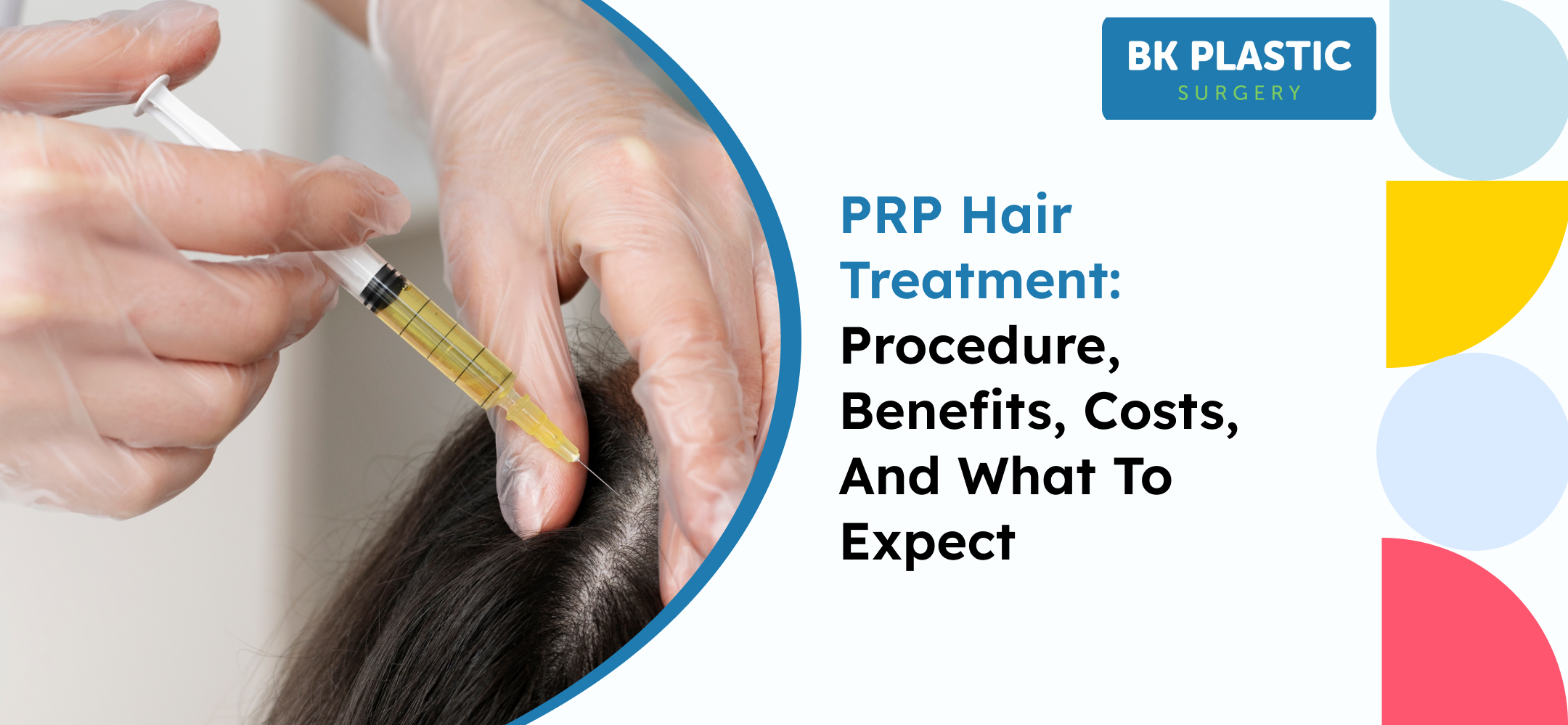
- Platelet Rich Plasma (PRP) Therapy is done by collecting a small sample of blood from the individual and processing it to concentrate platelets and then injecting it back into the hair follicles at specific sites.
- These injections help in improving blood supply to hair follicles, prolong the growth phase of hair, and possibly slow down hair thinning.
- This approach of PRP therapy for hair loss is beneficial for men and women with early to moderate cases of hair thinning.
Mechanism of Action:
When platelet-rich plasma (PRP) is injected into the scalp, it releases growth factors and bioactive molecules that support in restoring hair follicles. They help in
- Enhancing blood flow (angiogenesis) around hair roots and supplying more oxygen.
- Promoting hair follicle cells’ growth and division encourages them to stay in the active growth phase (anagen)
- Assisting the regeneration of weak follicles by making them stronger and healthier also reduces cell death.
Altogether, these actions lead to thicker hair and slow down hair thinning in people with early to moderate hair loss.
References:
Platelet-Rich Plasma for Androgenetic Alopecia: Mechanisms and Effects — PubMed (full summary): https://pubmed.ncbi.nlm.nih.gov/27631460/
Who Is a Good Candidate for PRP Hair Treatment?
Ideal Candidates
- People with early to moderate hair thinning
- Men or women facing hair loss and having less hair density.
- Individuals suffering from androgenetic alopecia (pattern hair loss)
- People are opting for natural treatment rather than surgical procedures.
- Individuals still have healthy hair follicles.
Who May Not Benefit
- People suffering from complete hair loss or baldness
- Individuals with destroyed or inactive hair follicles.
- Patients having any blood or platelet-related disorders
- Men or Women with scalp infections
- Someone expecting instant hair growth results
Platelet-Rich Plasma (PRP) Therapy Procedure: Step by Step
By knowing about the PRP Treatment for Hair, you will have an understanding of the process and will be better able to set realistic expectations and lessen anxiety. This is how your PRP treatment for hair will be carried out:
Collection of Blood:
A small sample of blood will be drawn from your arm, just like your routine blood test.
Preparation of PRP
The blood will then be placed into a Special Centrifuge, which spins the sample at a very high rate of speed, and this will separate the Platelet Rich Plasma from the blood.
Scalp Injections
Then the Platelet Rich Plasma will be injected into your scalp using a very small needle. These PRP injections will be placed into the thinning areas of hair.
The entire procedure usually takes 45-60 minutes, and most patients will say that the procedure is mildly to moderately painful. The Doctor will often apply a topical numbing agent to lessen the discomfort.
How many PRP sessions are needed for hair growth
PRP is not a single treatment procedure and has many variations in treatments. Based on real-world protocols, most clinics will recommend
- 3-4 sessions of PRP for effective hair growth.
- Sessions are scheduled after an interval of 4-6 weeks.
- Signs of improvement can start showing in a period of 2-3 months.
- The number of sessions will depend on the extent of hair loss and individual reaction.
- Maintenance boosters done every 4- 6 months will help prolong results in the long run.
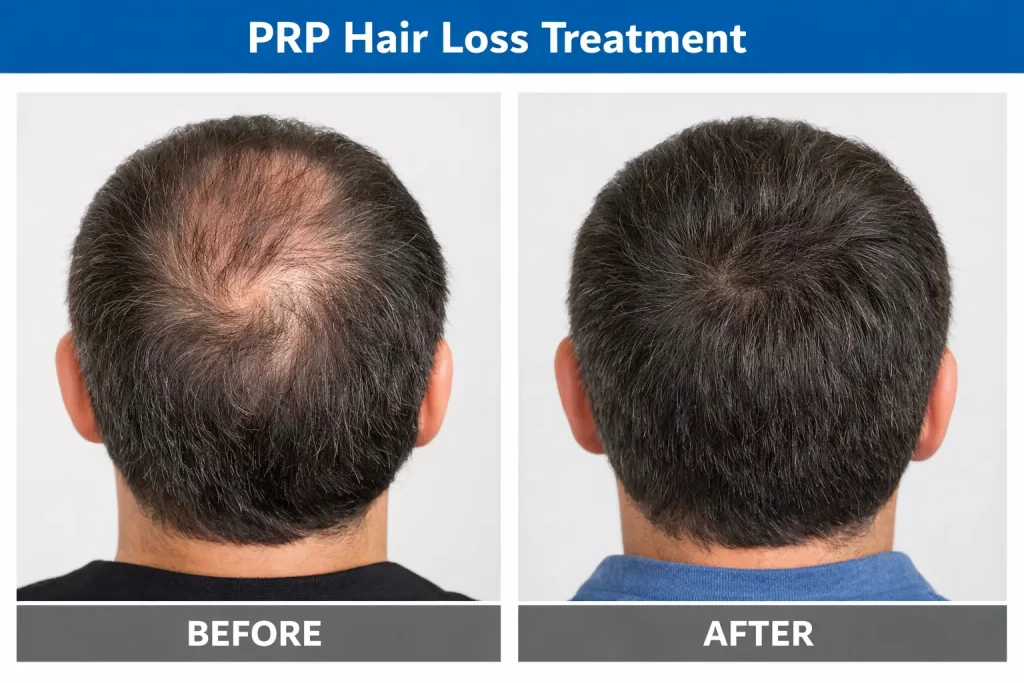
PRP Hair Treatment Advantages and Benefits:
Stimulates Natural Hair Growth
- Does not rip off your blood from the body, which means it is a natural treatment.
- Can stimulate dormant and weak hair follicles.
- Enhances healthier and thicker hair growth.
Reduces Hair thinning and hair loss
- Increases the strength of existing hair follicles.
- Controls hair fall and slows down hair loss over time.
- Improves hair density and volume
Improved Scalp Health
- Boosts blood supply to the scalp.
- Revitalizes hair follicles with growth factors
- Provides an environment for growing healthy hair.
Not invasive and safe
- There is no use of a knife or stitches.
- PRP therapy causes only mild discomfort and minimal downtime.
- Very low chances of an allergic reaction due to the fact that PRP uses one’s own blood.
Quick Recovery and Ease
- Approximate duration of the procedure: one hour.
- Can resume normal activities on the same day.
PRP Hair Treatment Price:
The cost of PRP hair treatment varies from location to location, based on the reputation of the clinic as well as the level of experience of the surgeon.
In practice, the cost typically reflects:
- The number of sessions included
- The quality of the equipment used to produce the PRP
- The level of expertise of the medical practitioner
Many clinics provide package pricing when booking multiple sessions at once, which is generally less expensive than paying for individual sessions.
Potential PRP Therapy side effects:
PRP is generally considered to be a safe non-surgical method when performed by trained professionals. However, just like any medical procedure, PRP is not completely without risk.
The most common side effect from undergoing PRP treatment is:
- You may experience mild scalp pain or tenderness.
- Temporary swelling and redness are common after the procedure.
- Some might observe minor bruising at the injection site.
These side effects are usually resolved within a short time span (less than four days) following treatment. In rare cases, patients could experience complications as a result of unsterilised equipment or improper technique, which highlights the need for qualified PRP practitioners.
Key Takeaway:
PRP (Platelet-Rich Plasma) hair restoration treatment may be an effective and beneficial method of treating hair loss naturally and non-surgically in early stages. If expectations are realistic and the procedure is performed properly, then PRP will help thicken hair, improve scalp health, and decrease hair shedding to some degree.
Another point to remember is that PRP will yield maximum benefits when paired with other hair care options. Make sure to have a qualified provider, an individualized treatment plan, and an initial thorough consultation before beginning treatment to increase the chances of obtaining the best possible results.
Author Bio
Dr. Barath Kumar Singh P is a certified Plastic, Reconstructive, and Aesthetic Surgeon at BK Plastic Surgery, Tiruvannamalai, with hands-on clinical experience in PRP hair treatment and hair restoration procedures. He applies evidence-based medical practices and patient-focused care to deliver safe, effective, and natural-looking outcomes in cosmetic and reconstructive treatments.
Medical Disclaimer
The content is written for informational and educational purposes only. PRP hair therapy results vary depending on individual health conditions. Readers are advised to consult a qualified surgeon before undergoing any hair loss treatment.